
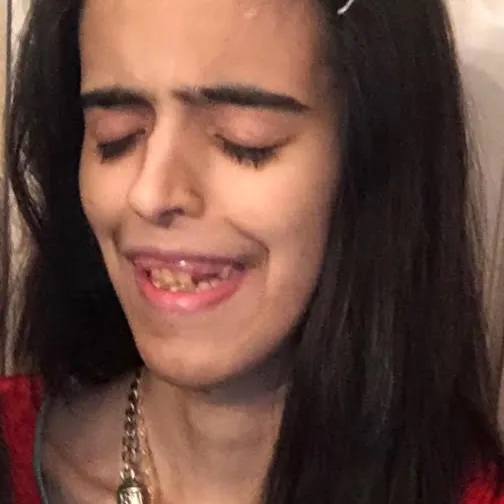
A previous mentee who has benefited from Flourish support and mentoring tells how she uses her lived experience through every day activism to influence positive change
What do you do for a living?
I’m a part time student at MMU where I research my medical condition. I also volunteer in my free time, which I find to be quite flexible and the people who are involved in and support volunteering tend to be a lot more supportive too. Volunteering also inspired my own methodology as I evaluate different activities and workshops built around particular projects (to ensure they are accessible for all). Despite my visual impairment, I have always confided in art and have painted all throughout my life. Because my sight has changed a lot, I find that doing visual tasks such as art is really important – it acts as an anchor to the real world.
How do you used your lived experience to create positive social change? – how does this relate to your work or wider volunteering experiences?
The way I regard my disability, is that it comes from outside, my influences and expectations. In order to counteract this, I use my lived experience to influence positive change for healthcare and research. I partake in everyday activism, things that people usually push away from. I influence health and education through public involvement and engagement. I get involved in groups of volunteers – a mix of people who are healthcare professionals, and others – people are trying to help inclusion. Because I have a lived experience of ableism, people have preconceived ideas that this is the only topic I am interested in, when in fact, I have many different interests, and often I feel discriminated against because of my disability.
Volunteering wise, I have been involved with accessibility and inclusion surrounding community events. There is a need to think about people who aren’t typically included into things. I find that most of it is talk and no action. Seemingly small actions make a big difference!
When did you first come into contact with Flourish and how did it help you?
I came into contact with Flourish around 2 to 3 years ago. I found out about Flourish in a start-up bootcamp – serendipity is one of my best friends! Flourish has particularly helped with visual difference and making events accessible. I have been involved with various workshops and different services plus Flourish invited be to share my views as part of a GMCA consultation and panel event. One issue I was having when I first came into contact with Flourish was accessibility and I wasn’t at the point in my life where people wanted to pay for my work. It was refreshing to have someone listen to my ideas without judgment and encourage me. Working with volunteers on events and projects was a great learning experience. Funding from Flourish also helped me with market research activities too.
Where has your journey taken you? Tell us about your highs and lows of the experience
One particular setback with my art has been my time being drained by people who should be supporting me – I feel like during this time I could have been doing a fulltime job. I have to allocate time and energy to get really good at things. I also feel as though there is going to be someone who can potentially take your results and exploit you. Another setback is trying to be able to have a clear mind, something in which my sensory processing disability doesn’t help with; there is only some space that you are left with in your head. It is worth highlighting that a lot of things these days are visual/screen centric, thus I am unable to access these resources.
What has been your proudest achievement so far?
My proudest achievement by far has been contributing to a UN report about accessibility in 2019 – specifically to do with women and girls and digital inclusion. I was presenting a paper in a symposium with other people, and then I was asked to be a participant for the report. Our paper was subsequently published in a book, and presented at that workshop, we then won an award. From that we got involved in writing in the report chapter, and they asked me if I want to work on that with them.
What do you do to keep yourself motivated?
Within and beyond my experience of a student with disability, if you look at the projects I’ve done outside the institutions, I have to keep remembering that I can do things and that it is only systemic things that weigh me down. My setbacks and adversities keep me motivated to do more projects.
Any tips to share to other people looking to start their own projects?
Be clear about what exactly you want to do and focus on your ideas. If you believe in it then keep going – understand that Covid shows that the world can turn upside down at any moment, and take your chances. There is always going to be another way back your goal, so don’t give up! You should also understand that there are always going to be people that believe in you and want to help you.
Do you think women need specialist support when it comes to developing an enterprise?
We need to be careful about the word special – we need particular support for things that have happened to people in their lives e.g. care responsibilities, health needs, time constraints and other things. Women do often need specialists support for things like this, things out of their control.
How can agencies best support women with disabilities to lead the change they see needed
The phrase ‘interdependent care’ is used a lot but it is actually really important for those who have care responsibilities. It is the same in social enterprise and voluntary work – therefore you need to be adaptable. Flourish has been really positive – when I’ve gone to face to face workshops, I can work with people in a safe space, and people are aware of my disability without stigma. This increases accessibility and helps get the best out of people.
